Small Bottles, Big Impact: How Low-Cost Drip Irrigation Can Ease the Global Water Crisis
by Sarah Mushtaque
Agriculture accounts for almost 70% of global freshwater consumption (“Water Scarcity”), making it one of the most significant water-consumptive sectors in economies worldwide. Freshwater sources are almost inevitably overused by such sectors to keep nature thriving and to feed the growing population. Underground aquifers, rivers, and lakes are drying up or being used to their limit, with many developing and developed nations such as India, China, and the United States reaching the final capacity of these freshwater sources, hence leading to researchers coining the term “Global Water Conservation Issue”. With climate change instigating further droughts, groundwater reserves continue to decline in several regions, and investigations prove that there has been an inherent scarcity of water in agriculture-inclined areas. Primary sector-dependent economies have now faced the opportunity cost between producing sufficient food and conserving limited water resources. Conventional irrigation methods have resulted in surface water runoff, evaporation, and deep percolation, intensifying the scarcity of water. In response, drip irrigation systems have emerged as a promising alternative, proving to enhance irrigation efficiency by supplying water directly to root zones and reducing overall water consumption in the primary sector. Despite the high maintenance cost of traditional drip irrigation systems, affecting their accessibility for small-holder farms, low-cost drip irrigation systems offer the possibility of providing a practical solution to the global water conservation crisis and improving quintessential farming methods in the region. Low-cost drip irrigation addresses water scarcity by reducing water consumption, improving agricultural water productivity, and enabling the adoption of water-saving technologies on smallholder farms, while also addressing cost and implementation challenges.
One of the primary ways low-cost drip irrigation mitigates the water conservation crisis is by minimising water consumption by decreasing the levels of water lost to the environment. When conventional irrigation methods, such as flood irrigation techniques, are implemented, they distribute water across the entire soil surface without catering to individual crop plants. Hence, a significant percentage of water is lost or dried up before being fully absorbed by the crop plants. The likelihood of water evaporating due to heat, flowing away as run-off, or downward movement of excess water through deep percolation is very high, thereby reducing the overall efficiency of traditional agricultural methods. According to a farm-evaluation research conducted by scientists in Zimbabwe, low-cost drip irrigation systems reduced water consumption by 50%, a drastic fall compared to the traditional flood irrigation systems, leading to higher water-use efficiencies (Maisiri et al. 785). This is possible due to the area of wetted water between the two contrasting irrigation systems. With surface irrigation methodologies, around 100% or more of the soil is wetted, leading to higher evaporation rates in addition to deep percolation. On the contrary, drip irrigation observes a 30% wet area percentage as it targets the root zone of each plant without distributing the water to the entire soil. The difference of 70% may not seem momentous, but in agricultural contexts, the usage of less water is linked to more conservation of necessities for future generations, higher water efficiency, and increased crop yields. This has also been authenticated in a study conducted in Ukraine to improve water efficiency, where the “targeted application” of irrigated water through a network of valves, pipes, and emitters has prevented soaking the entire plot of land, hence reducing the level of water consumption (Askaraliev et al. 52). For instance, a vegetable farmer growing tomatoes on flood irrigation might use 100 units of water per acre, but the crop effectively uses only 50 to 60 units (“How to Reduce”). However, when implementing drip-based irrigation, that same crop gets its full requirement using roughly 60 to 70 units total. The gap between water pumped and water used shrinks dramatically. According to published article from the International Journal of Agriculture Research and Extension (Kumar and Gupta), drip irrigation can reduce water consumption by 40 to 50% compared to conventional flood methods, while maintaining or even improving yield in several crops, which highlights a major difference between profitable farming and breaking even.
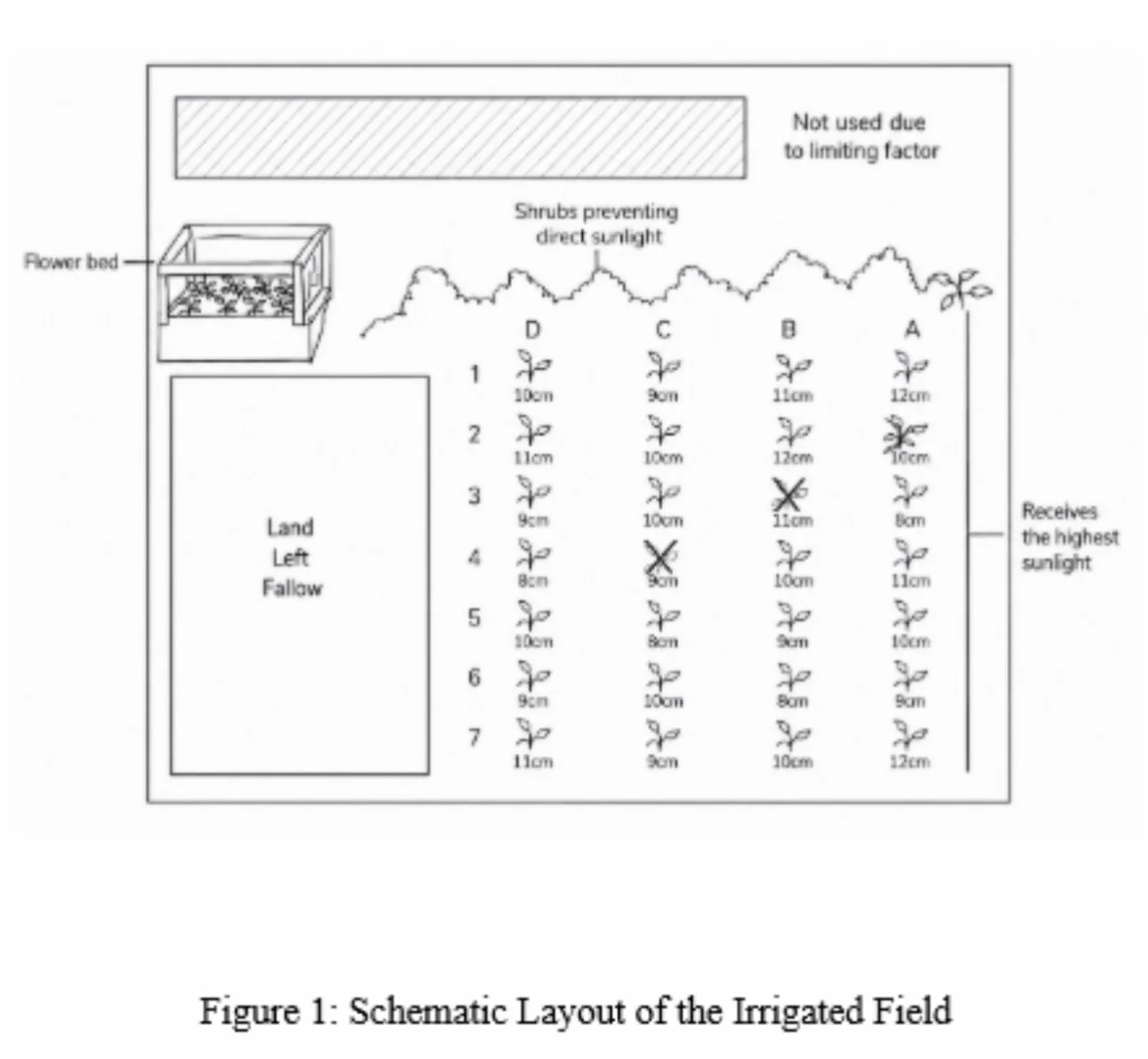
A field experiment using low-cost drip irrigation, as shown in Figure 1, was conducted to assess the practicality of the irrigation method, which was constructed and tested in the BERNOSSUS (local NGO) community garden. The experiment involved examining 28 crop plants (Ipomoea aquatica), planted uniformly in 7 rows of 4 columns. The comparative experiment consisted of 14 plants receiving low-cost bottle drip irrigation, while the remaining 14 plants received a conventional irrigation technique. The plants were grown under similar ambient conditions to avoid the influence of limiting factors. The independent variable was the type of irrigation technique (bottle-drip irrigation and conventional irrigation) implemented, while the dependent variables were the crop yield, water usage and plant growth. Controlled variables included the plant species, number of plants, soil type, growing environment, planting duration, and other cultivation conditions to ensure a fair comparison between treatments. Data on water use and plant growth were collected throughout the growing period and compared between the two groups.
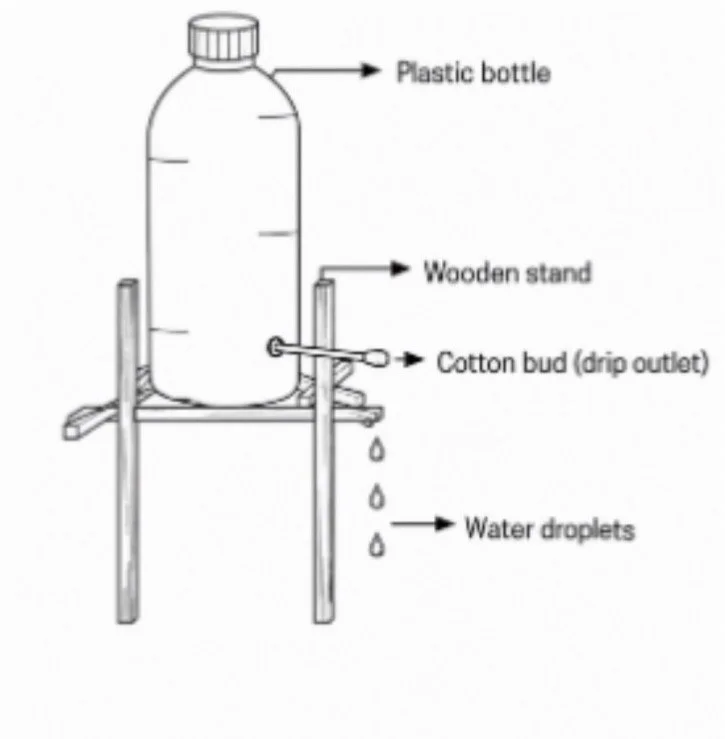
The experiment utilised plastic bottles with the prototype using cotton buds inserted through punctured holes to regulate the drip rate, as displayed in Figure 2. The system was created to supply water to the Ipomoea aquatica, thereby reducing the likelihood of surface runoff and evaporation that commonly occurred with conventional flood irrigation systems. The study calculated and recorded water usage measurements over the experimental period. Despite being constructed on a small scale, the pilot study authenticated that the low-cost drip irrigation method significantly reduced water usage.
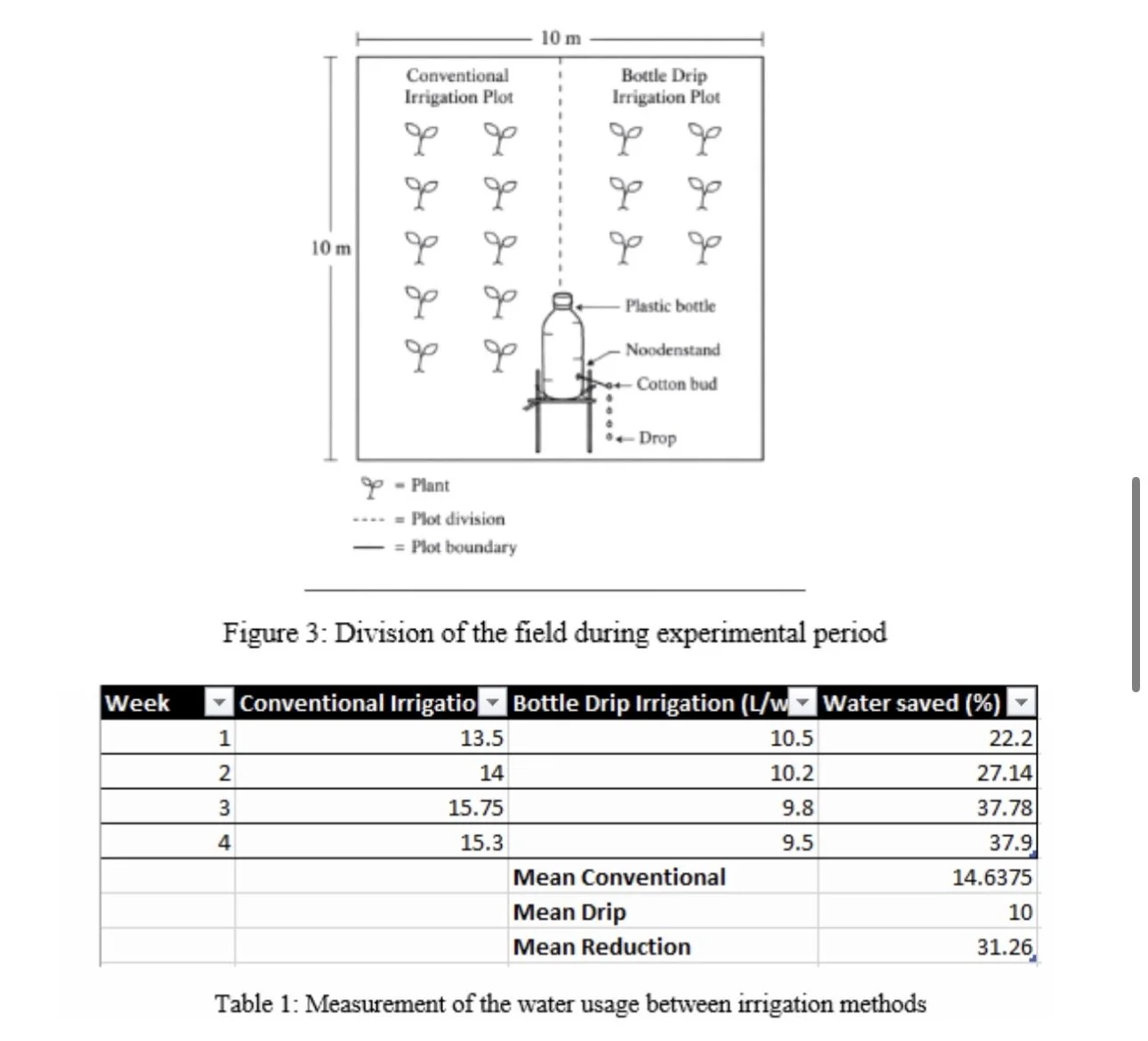
As shown in Table 1, the experimental period consisted of 4 weeks of consistent measurements. Bottle drip irrigation in week 1 utilised 22.22% less water (10.5 L/day) than conventional irrigation techniques, highlighting a significant decrease in water usage. It is quite evident that during the 4 weeks of experimentation, while conventional irrigation methods used water greater than 10 L/week, maintaining an average of 14.64L/week, drip irrigation used an average of 10L/week, highlighting the drastic contrast in water usage between the two irrigation systems. This decline in water usage by the method helps conserve water to a greater extent. The decrease in water usage is also due to the directed supply of water to the specific plant, reducing any requirement for additional sources. The root zones of each plant were targeted, minimising the likelihood of water wastage.
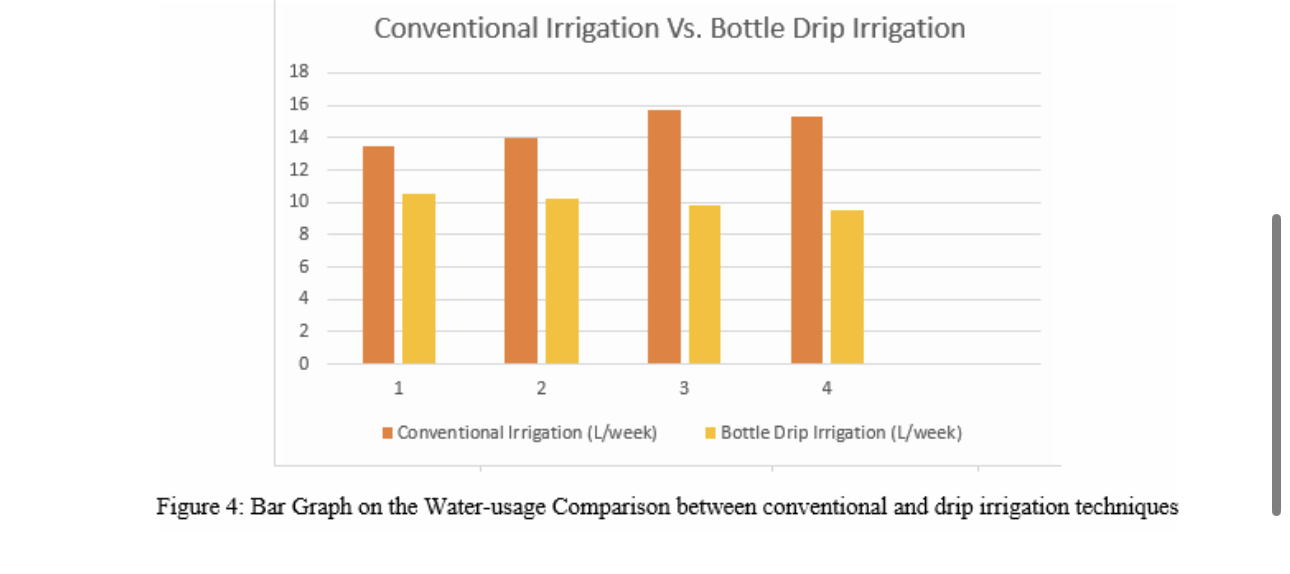
Together, both the scientific evidence and the findings of this investigation, as summarised in Figure 4 by the bar graph, demonstrate that reducing physical water losses is one of the most significant ways low-cost drip irrigation conserves freshwater resources. It supports the hypothesis that the bottle drip irrigation system reduces water consumption, leading to small-holder farms having the opportunity to save more water. By directing water directly to the root zones of the plant, additional water sources are not required, and with agriculture being one of the major water-consumptive sectors, this quality helps farmers deviate from traditional irrigation techniques that overuse water resources, hence leading them to conserve and sustain for the future generations.
Drip irrigation has also had a noticeable contribution to enhancing water productivity, which is directly linked to increasing crop yields, catering to the demand of the growing population worldwide. Plant growth rate is heavily influenced by the quality of water supply an individual plant gets, which refers to a consistent supply of water to the plant’s root system. The flood irrigation method often leads to excessive cycles of watering followed by phases of water stress, which can disrupt the meristematic zone of a plant, the very part responsible for root development and cell division. On the other hand, drip irrigation provides a consistent, controlled amount of water directly to the plant’s root, helping it to retain ambient moisture levels. This consistent water availability allows plants to absorb water and nutrients more effectively, creating favourable conditions for healthy growth and higher yields. According to the irrigation report assessed by agroscientists, drip irrigation increases crop yield by 28.92% compared to traditional flood irrigation techniques (Yang et al. 1733). This refers to the fact that drip irrigation enables more crops to grow per unit of water, even in areas where there is a lack of water. This has been further validated by the aforementioned research (Maisiri et al. 787), where the investigation suggests that low-cost drip irrigation has the highest crop yield levels regardless of the type of fertiliser used. The leaf area index (LAI) was higher in drip irrigation despite the same quantity and quality of fertiliser treatment between the conventional flood irrigation system and the low-cost drip irrigation system.
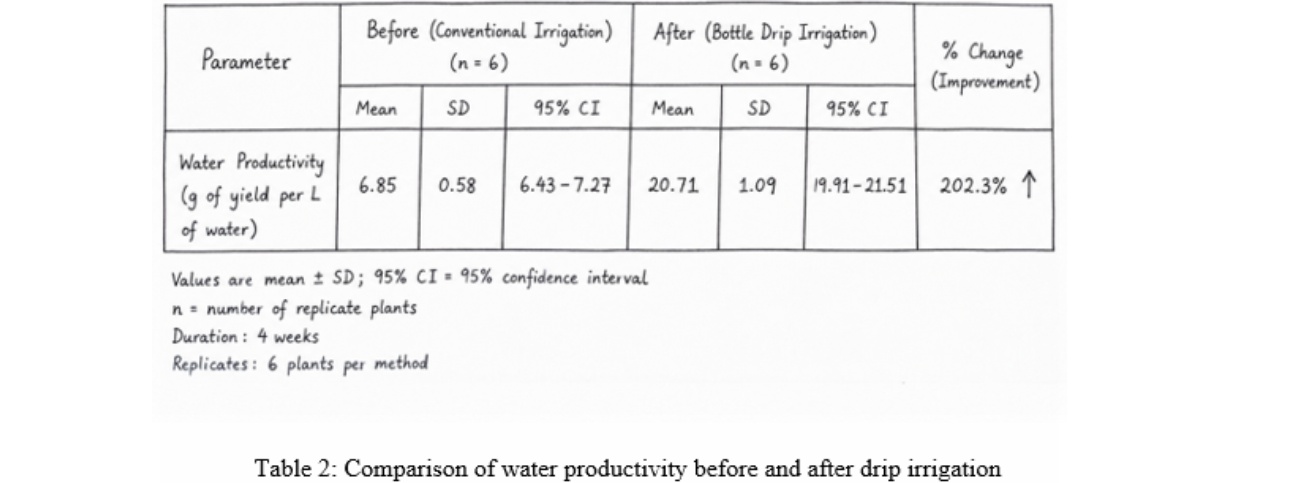
During the experimental period, in addition to recording the water consumption, the crop yield was also assessed by measuring the water productivity. Water productivity refers to the plant growth achieved per unit of water applied. Although conducted on a small scale, the pilot study has recorded measurements supporting the hypothesis that low-cost drip irrigation enhances water productivity, hence leading to rising crop yields.
As shown by Table 2, the water productivity, measured in g of yield per L of water, highlighted the vast difference between traditional irrigation methods and the low-cost bottle drip irrigation technique. During the conventional irrigation method, water productivity was 6.85 g of yield per L of water. After the use of bottle drip irrigation, the water productivity increased to 20.71 g per L of water used. The rise from 6.85 to 20.71 suggests an improvement in the plant growth quality. The meristem has grown further with bottle drip irrigation compared to conventional irrigation methods. There has been adequate elongation of root systems due to the specific targeting of water via the drips. Therefore, by improving water efficiency and ensuring consistent moisture availability for crops, low-cost drip irrigation has been shown to significantly enhance crop productivity while reducing the resource constraints faced by farmers. Agricultural water productivity plays an important role in not only increasing crop yield but also in catering to the goal of food security globally. With the production and growth of more crops, more food resources will be supplied, aiding in the global demand for food, hence showing the bottle drip irrigation’s ability to increase yield of food resources.
Moreover, affordable, low-cost drip irrigation provides the scope for small-holder farms to adopt water-saving technologies on a wider scale. Especially in developing economies in South Asia, small-holder farms produce a significant share of the global food supply despite not garnering enough credit for their contribution. Most of their agricultural methodologies are either too labour-intensive or rely on ancient irrigation techniques that rarely enhance crop yield. They require advanced and efficient irrigation systems, but most of the complex machines used in irrigation exceed their production cost, imposing limitations on the overall food supply. This forces many of the smaller farms to depend on ineffective but costly irrigation measures. With the help of low-cost drip irrigation, such barriers can be overcome, lowering initial costs and introducing affordability, hence allowing more small-holder farms to adopt water-saving technology. According to Polak et al, there is confirmation that low-cost drip irrigation reduces initial input costs by 40-70%, as it reduces capital investment from $1000 to $50 per acre of land (Polak et al. 120). This significant decline causes small-budget farms to implement such irrigation systems to enhance water productivity and crop yield. Conventionally, with flood irrigation techniques, initial capital requirements would consist of gates, bunds, pumps, and fuel, which could raise costs to $300-15,000 per acre of land. Therefore, by making efficient irrigation systems more affordable and accessible, low-cost drip irrigation enables the widespread adoption of water-saving technology on smallholder farms, reinforcing its role in addressing water scarcity.
Despite being advantageous, the drip irrigation method is not without its limitations. Investigations have compared commercial drip irrigation systems with bottle-based irrigation systems, concluding that the latter requires more manual labour (Baranchuluun et al. 150). The manual labour includes regular refilling, monitoring and occasional maintenance to prevent clogging or inconsistent water flow. The implementation of a bottle drip irrigation system is more applicable for small-scale settings, such as community gardens or home-grown vegetable pots. However, it has not yet provided much success in large commercial settings, and these limitations, in the global context of affordability and accessibility, should be considered. For small communities, schools, and small-holder farms with limited capital and investment, low-cost bottle drip irrigation offers a practical alternative where commercial systems are unavailable or prohibitively expensive. By significantly reducing installation costs while still improving water-use efficiency, low-cost drip irrigation provides a realistic and sustainable solution that can contribute meaningfully to the water conservation crisis, specifically in resource-limited environments.
The investigation sought to evaluate and prove that low-cost bottle drip irrigation has considerable potential as a sustainable approach to addressing water conservation challenges in agriculture on a wider scale. Through a review of existing literature and the findings from the pilot project, the research has supported the hypothesis that low-cost drip irrigation can reduce water consumption while maintaining high-quality plant growth and also enhance crop yield. Although the study was a prototype of what low-cost drip irrigation would entail, the results aligned with the environmental and economic benefits of low-cost irrigation globally for farmers and the agricultural sector. With climate change being a focal issue in the newspapers, there is increasing pressure on global freshwater sources. Population growth is on the rise, leading to higher food demand across the globe. Due to this, there needs to be a permanent decision made based on the choice of producing more food or conserving more resources for the future generation. Innovations such as bottle drip irrigation offer a realistic pathway toward more efficient water management agendas. Hence, this research suggests that low-cost drip irrigation can contribute meaningfully to reducing water consumption, helping to offer a solution to the global conservation crisis, and providing an affordable water-saving technology for smallholder farms, while also increasing crop yield across global agricultural forums.
WORKS CITED
Askaraliev, Bakytbek, et al. “Development of Modern Irrigation Systems for Improving Efficiency, Reducing Water Consumption and Increasing Yields.” Naukovij žUrnal «Tehnìka Ta Energetika», vol. 15, no. 3, 18 June 2024, pp. 47–59, https://doi.org/10.31548/machinery/3.2024.47.
Baranchuluun, Sh., et al. “A Cost Benefit Analysis of Crop Production with Various Irrigation Systems.” International Federation of East Asian Management , vol. 5, pp. 146–156, https://ifeama.org/ifeamaspscp/selected%20papers/13th%20in%20Ulaanbaatar/13th%2012%20%20A%20cost%20benefit%20.pdf. Accessed 18 July 2026.
“How to Reduce Drip Irrigation Cost Without Losing Yield.” Ksnmdrip.Com, 2026, https://ksnmdrip.com/blogs/reduce-irrigation-costs-without-affecting-crop-yield?srsltid=afmboorovb_ngk9hfsjkfdku3gccnqgu7e6ea_wh5iis0epf26rhxx-g. Accessed 12 July 2026.
Kumar, Arvind , and Shubham Gupta. “Water Management and Irrigation Efficiency: Challenges and Opportunities in Indian Agriculture.” International Journal of Agriculture Research and Extension, 2024, https://allagrijournal.com/media/post/Agri-1-1-3.1_hVilFZa.pdf.
Maisiri, N., et al. “On Farm Evaluation of the Effect of Low Cost Drip Irrigation on Water and Crop Productivity Compared to Conventional Surface Irrigation System.” Physics and Chemistry of the Earth, Parts A/B/C, vol. 30, no. 11–16, 29 Sept. 2005, pp. 783–791, https://doi.org/10.1016/j.pce.2005.08.021.
Polak, Paul, et al. “A Low Cost Drip Irrigation System for Small Farmers in Developing Countries.” Journal of the American Water Resources Association, vol. 33, no. 1, Feb. 1997, pp. 119–124, https://doi.org/10.1111/j.1752-1688.1997.tb04088.x.
“Water Scarcity.” World Wildlife Fund, 2025, https://www.worldwildlife.org/our-work/freshwater/water-scarcity/. Accessed 10 July 2026.
Yang, Pei, et al. “Review on Drip Irrigation: Impact on Crop Yield, Quality, and Water Productivity in China.” Water, vol. 15, no. 9, 1 Jan. 2023, p. 1733, https://doi.org/10.3390/w15091733.